

Connectors are configured per-organization and scoped by persona permissions. Users only access data they are authorized to use.
Accessing connections
Navigate to Connections in the left sidebar. The Connections page is divided into two tabs, each covering a different integration category.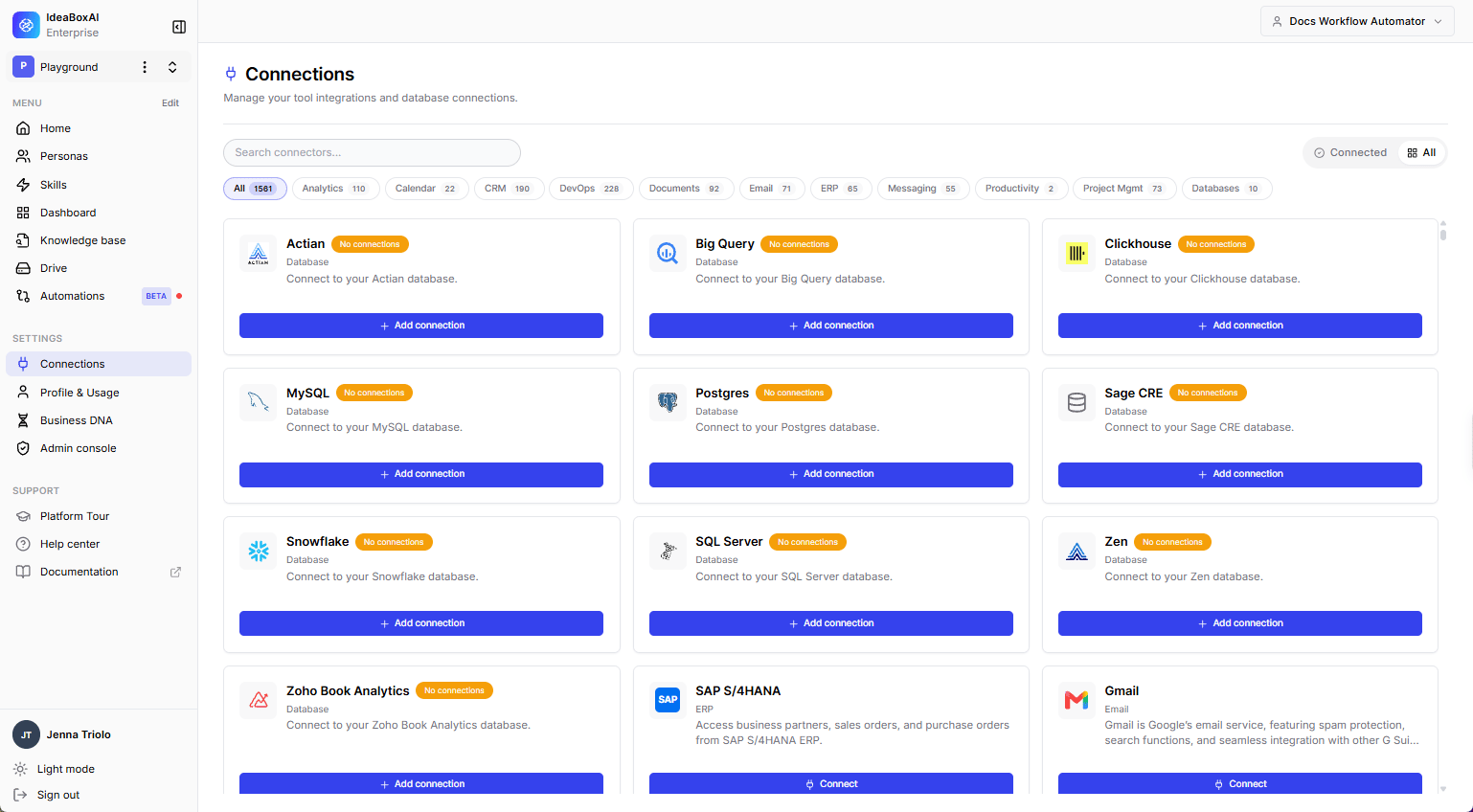
How to connect a connector
The following steps walk through connecting an external service to IdeaBoxAI. Google Workspace is used as an example, but the same flow applies to all OAuth-based connectors.1
Go to Settings
Go to Settings in the left sidebar to go to Connections.
2
Browse and search for the connector you want
The Connectors page displays all available integrations across different categories. Use the search bar to find a specific connector. For example, type “Google W” to filter the list and locate the Google Workspace connector.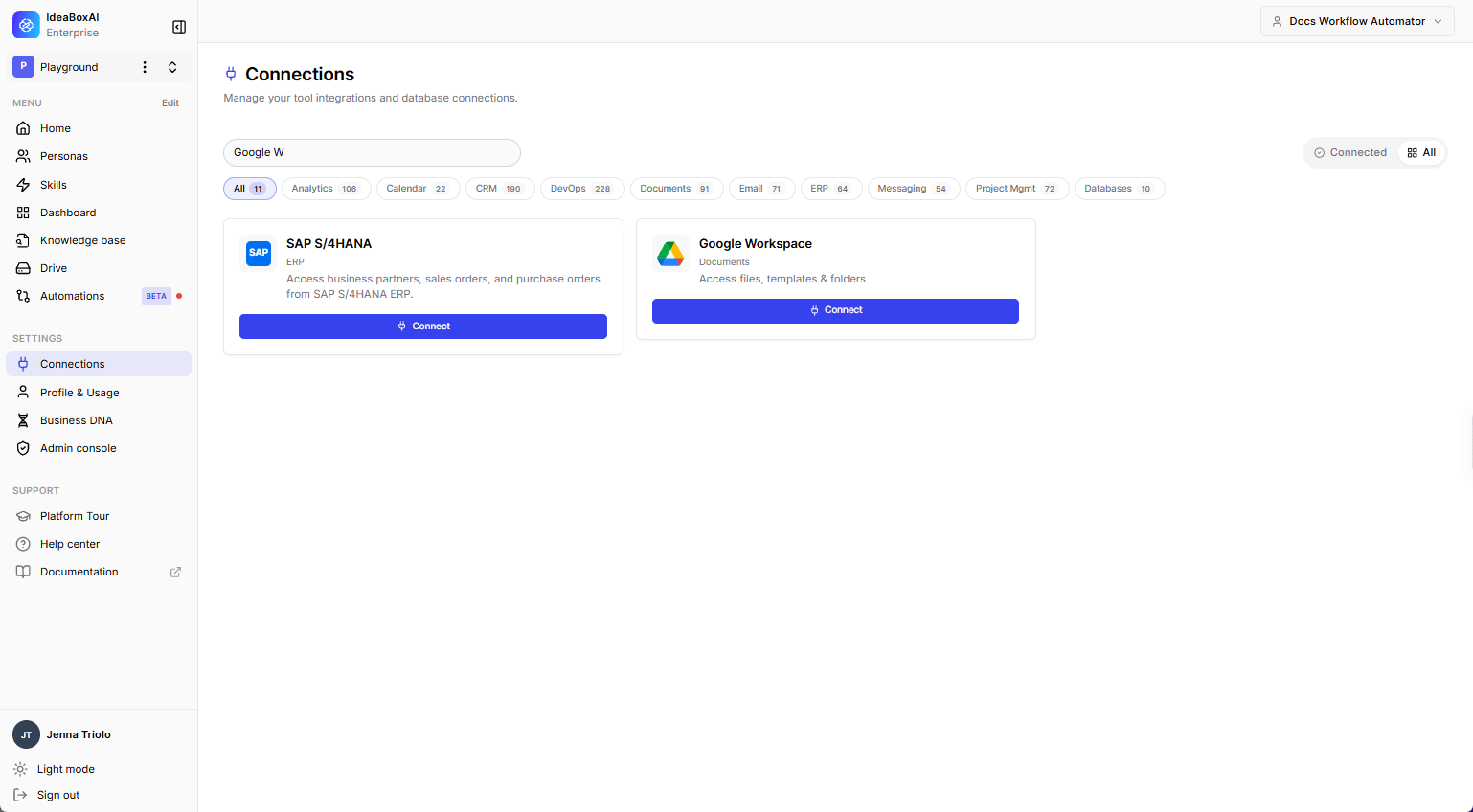
3
Connect your Google account
Click the Connect button on the Google Workspace connector card. The platform navigates to the Sign in with Google screen. Choose an account, or select Use another account, and grant the requested permissions.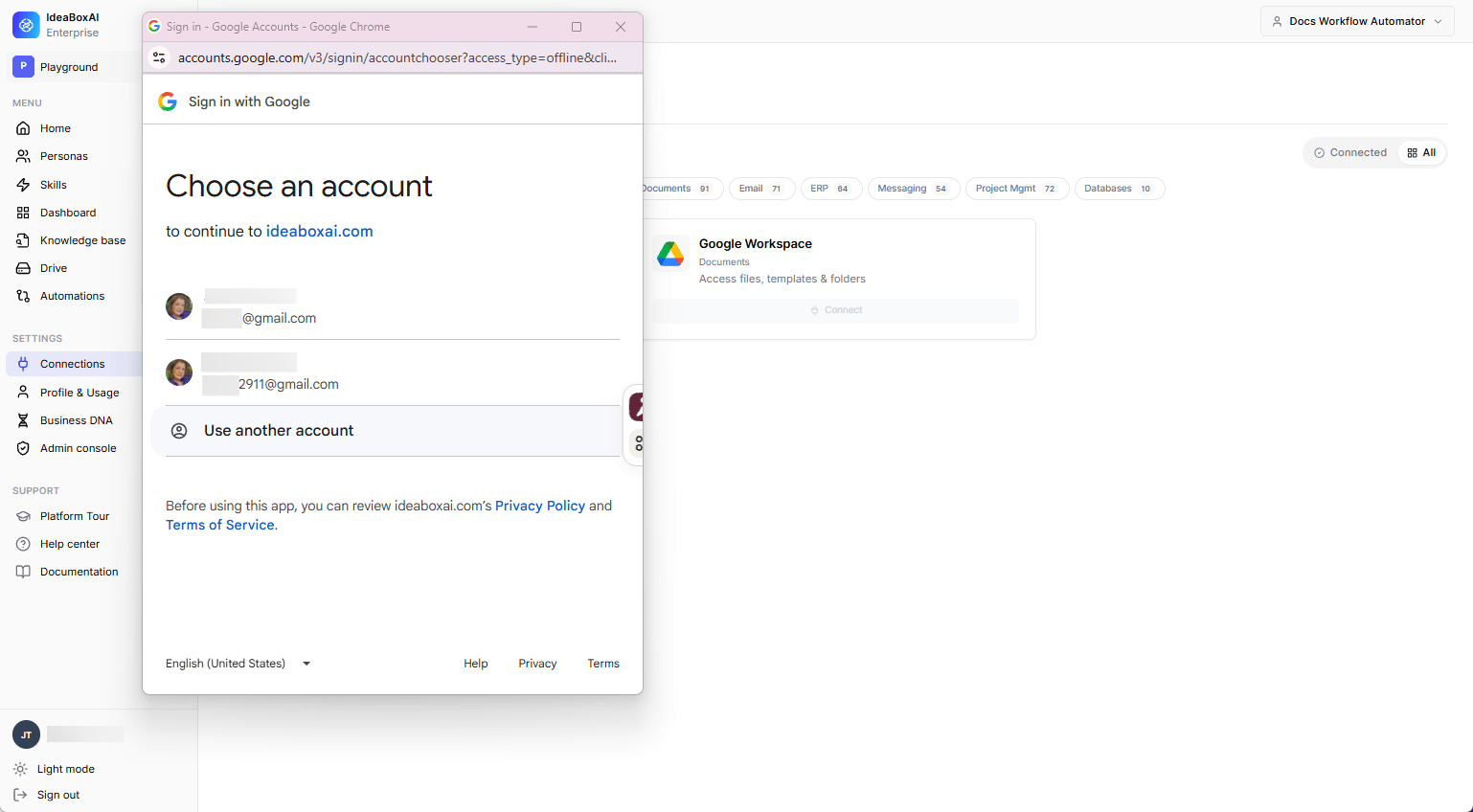
4
Google Workspace connected successfully
After authenticating, the Google Workspace connector shows a Connected status on the Connectors page. The integration is now active and ready to use across agents, knowledge bases, and automations.From here, you can click Show connected accounts to view accounts linked to this connector, or Add another account to connect an additional Google account.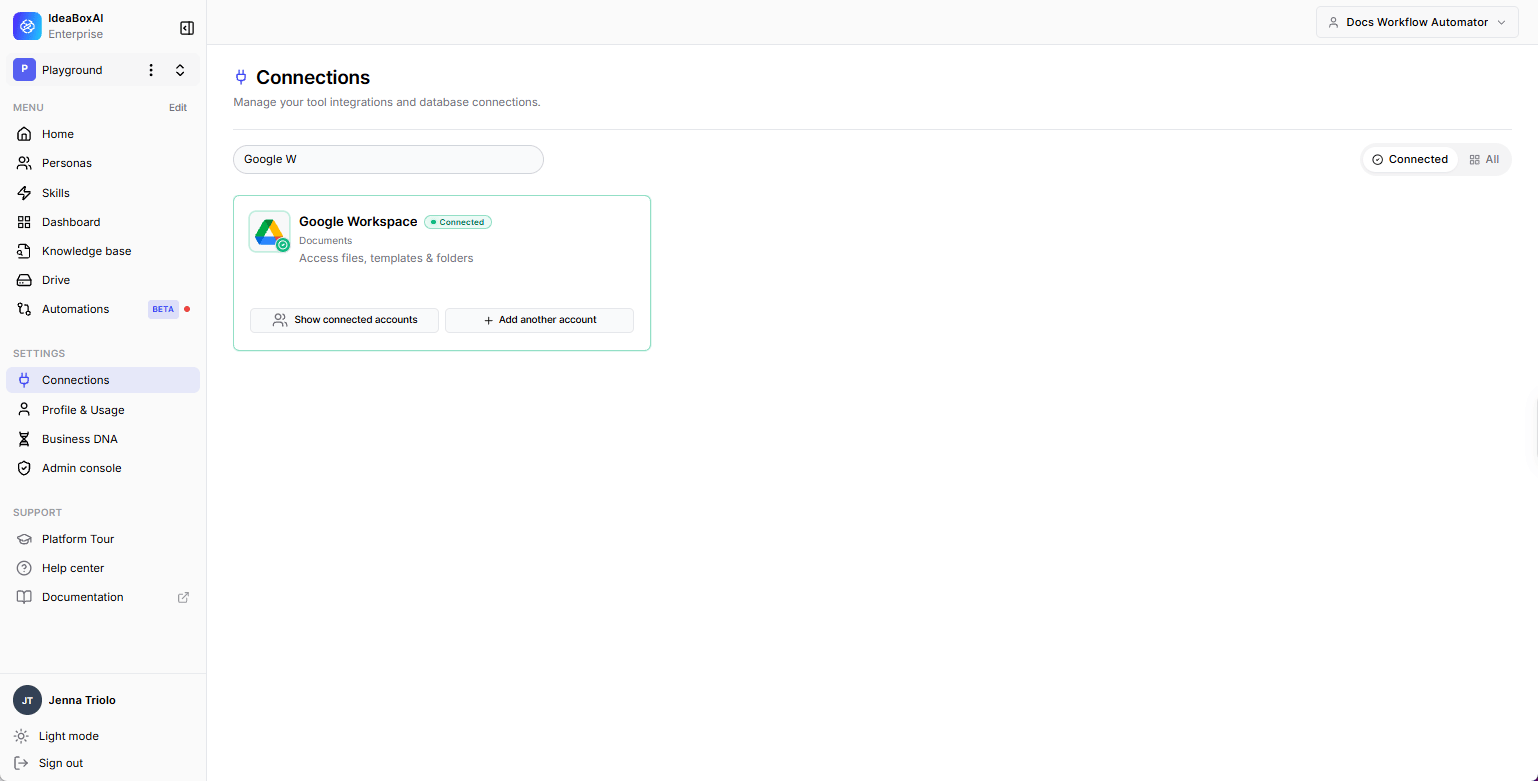
Connection layers
IdeaBoxAI uses connections to integrate with external data sources and services. Connectors are configured inside knowledge bases to provide access to databases, documents, and cloud services.How connectors power the platform
IdeaBoxAI workflows depend on connectors to access data and services. The following table shows how connectors support different platform features.Core value proposition
Connectors deliver measurable improvements by removing manual data retrieval and enabling AI-powered workflows.- Query live databases and documents through natural language without writing SQL or switching tools.
- Send emails, post to Slack, and update CRM records directly from the agent chat interface.
- Combine multiple data sources in a single agent for comprehensive, cross-system intelligence.
- Automate multi-step workflows that span databases, documents, and communication tools.
- Maintain security through per-persona permission scoping and organization-level configuration.
Next steps
Explore the following guides to configure your connectors.Knowledge base connections
Connect databases, documents, and cloud warehouses to your knowledge bases.
Connector directory
Browse all available connectors by category with setup requirements.
Troubleshooting
Resolve common connection issues for databases and imports.